Showing posts with label celebrity. Show all posts

Friday, 14 November 2008

John Cleese says Hair Transplants are No Laughing Matter

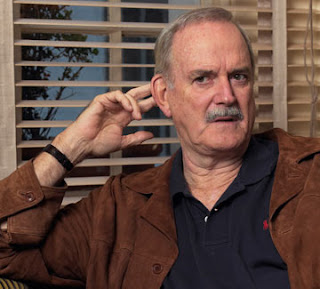
Throughout his career, John Cleese has been ahead of the game - and yesterday, the star of Fawlty Towers gave hope to many follicularly-challenged males when he told Richard Madeley and Judy Finnegan that he'd not only had a hip transplant but a hair transplant.

The explanation he gave was typical Cleese: "Because I've got a very strange shaped skull, very pointy and I don't like wearing wigs."

Treatments for male pattern baldness have come a long way from Hippocrates' times - he applied a mixture of pigeon droppings, horse-radish, cumin and beetroot to his head. Cow saliva, bats milk, deer marrow, spiders' webs, horses teeth and coffee are other remedies that men throughout the ages have turned to in an increasingly desperate attempt to turn the tide of hairlessness (the term 'snake oil' originally comes from a tonic hawked in 19th century America as a baldness therapy).

However in the 21st century there have been steps forward for the man mourning his hair loss. There are medicines that have been proven in some cases to encourage new hair growth and stop the rate of hair loss (Minoxidil and Finesteride); and there are human trials currently taking place to see if hair follicle cells grown in the lab will grow in the head once replanted .

Most importantly, if you have a spare £5-8,000, hair transplantation has improved – and is continuing to improve - beyond the dreams of its early practitioners. Cleese lives in America now, but there are surgeons who are looking at this in the UK.

Greg Williams is the consultant in charge of the burns unit at London's Chelsea and Westminster hospital. He is one of a handful of surgeons in the UK who are pioneering new techniques for hair transplantation, and treats those who have lost hair, eyelashes and eyebrows due to burns, cancer treatment and male pattern baldness, though the latter is not available on the NHS.

Male pattern baldness (also known as genetic hair loss or alopecia androgenetica) is the most common form of hair loss in men. It usually develops gradually, typically involving the appearance of a bald spot on the crown of the scalp accompanied by thinning at the temples. The condition will affect half of all British men by the time they are 50 (almost a third are appreciably bald by the age of 30).

It occurs when hair follicles, the tiny sacs in the scalp from which hair grows, become sensitized to the hormone dihydrotestosterone, or DHT, which stimulates the growth of facial and body hair. The follicles shrink, so the hair becomes thinner and grows for less time than normal. The condition runs in the family, and the strongest influence is on the mother's side: if your maternal grandfather went bald, that's probably a better indicator than if your father's father lost his hair.

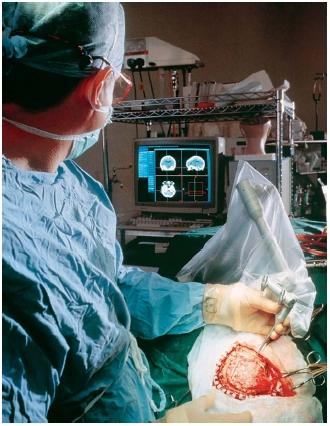
Put simply, hair transplantation works by taking hair from the areas that are not affected by hair loss and transplanting them to the areas that are. According to Mr Williams the results are "very good", though the take of grafts is less reliable in scar tissue than in healthy normal tissue (75–80 per cent for scar tissue compared to 95-98 per cent in normal tissue).

"Any man with male pattern baldness will have a horseshoe of hair remaining around the back and sides of his head," says Mr Williams, and it is from here that a strip of skin will be taken under local anaesthetic. The hairs from this section of skin will retain their own characteristics (ie they grow) rather than acquiring those of the place to which they are transferred (where hair does not grow). Dissecting the hairs from this strip of skin into their follicular units is painstaking work ("you have to have OCD to do this job", says Williams) and performed by a team of three or four technicians. Filling in a patient's temples alone, say, could require 500 hairs.

Old fashioned 'plugs' – the ones that gave hair transplants a bad name - would implant 12-15 hairs at one go. The modern ones use 1-3 hairs, inserted in incisions ranging from .75mm to 1.5 mm in diameter. "I normally aim to use single hair follicular units in the most important aesthetic areas, like eyebrows, eyelashes or the front hairline," says Mr Williams. "Further back I use larger groups of hairs." On average, the surgery takes around five to six hours.

It takes around 6-9 months to see the effect, but by then the hair should be growing as it did in its old home (patients who have had eyebrows or eyelashes done need to be aware of this, and the fact that they will now have to trim them every 5 -7 days). Although all patients are made aware that more work may be needed in the future , as male pattern baldness is progressive, the process can be life-changing.

"I had a patient who used to wear his hair over his eyes all the time because his eyebrow had been burnt off," says Williams. "Now he wears it off his face and that's made a big difference. There's another man who I'm about to operate on who can't go for job interviews because he feels he has to wear a hat all the time. It can be crippling."

Indeed. A recent survey of five European countries found that British men are unhappier about being bald than most of their European counterparts, but are too embarrassed to do anything about it. More than half said going bald made them feel old and less attractive.

Two years ago, LibDem MP Mark Oaten blamed his midlife crisis and ensuing sex scandal on losing his hair. It's unfortunate then that skilled hair transplantation is still so rare - the British Association of Hair Restoration Surgeons of which Williams is a member numbers only 11 members, and he is only one of two surgeons in the country who transplants eyelashes.

But he remains upbeat. "The reason it's not so popular in the UK is that the training is almost non-existent and people have memories of the bad transplants in the past," he says. "Cosmetic surgery in the UK lags behind America by about 10 years but as we are seeing more and more men having plastic surgery and botox I'm sure there are more who will be interested in hair transplantation."

And with Cleese speaking out with enthusiasm for such operations, Williams is likely to be right.

Julianne Moore Changes Mind About Cosmetic Surgery

The star of new movie 'Blindness', 47-year old Julianne Moore, has always been outspoken about her negative feelings concerning cosmetic surgery. But recently, it seems the Oscar-nominated actress has had a change of heart.


The actress has been quoted as saying a few years ago, “I would never ever have plastic surgery. We’re all just going way too far. I know it’s a product of the whole celebrity industry, but it’s something I absolutely detest. I want my daughter to see what is real, not what is unachievable and fake.’ The 46 year old actress believes in aging gracefully and that the aging process is a “fact of life.” Moore adds, “I’m a 43-year-old woman, and 43-year-old women have lines. I think imperfections are important, just as mistakes are important. You only get to be good by making mistakes and you only get to be real by being imperfect.”

She also more recently spoke out against Botox, a dermal injectable used to combat wrinkles, saying, “”I don’t know why women do Botox. It doesn’t make them look younger, it just makes them look like they had work done. You are not going to look the same as you did at 25. What are you going to do about it?”

But now, the red-headed vixen is changing her tune in regards to going under the knife, reportedly saying, “I never say never.”

But the newfound open-mindedness came with a caveat, as she is quoted as saying, “The only thing that worries me, the analogy I use is ancient Chinese feet-binding.

At what point did they decide that small feet were more beautiful? People started making them smaller and smaller until they were stumps and not beautiful at all.

I feel we have decided that being expressionless and young looking is the most beautiful thing and, in pursuit of that, it becomes more and more exaggerated and totally obliterates what we look like.”

On his blog, Dr. Anthony Youn writes, “I think the Chinese foot binding analogy goes a bit far. Much of plastic surgery is meant to restore the body to a previous state or remove excess skin that can become both a cosmetic and functional problem, such as tummy tucks and thigh lifts. The aim of good plastic surgery is a natural rejuvenation, not abnormal deformation like in Chinese foot binding.”

Tuesday, 21 October 2008

Big Brother Celebrity Sues Plastic Surgeon

Ex-Celebrity Big Brother contestant Pete Burns will get compensation for botched lip injections which left him feeling 'repulsive' and 'suicidal'.

The 1980s pop star sued Harley Street surgeon Dr Maurizio Viel after suffering swelling and blisters caused by the treatment.

Last week the doctor's legal team admitted to the High Court that Pete was not properly warned of potential side-effects of the product called Outline Original.


Dr Viel also failed to observe guidelines about its use in conjunction with other products, and gave an excessive number of follow-up injections.

Pete claims he was forced to sell his musical back-catalogue because he was unable to work, and will also be suing Dr Viel for financial losses.

Auriana Griffiths, from firm Irwin Mitchell, said: "The barrister representing Dr Viel confirmed last week in court that the allegations of negligence set out in the original documents filed at court have been admitted.

"At this stage, the investigation into the value of the case is ongoing and no figure has been agreed."

Friday, 17 October 2008

Twiggy Gives Opinion on Cosmetic Surgery

In an interview with the Daily Mail, supermodel Twiggy, nee Lesley Hornby, corrects past perceptions of her views on plastic surgery.

At almost 60 years of age, Twiggy still looks great. To date, Twiggy follows a sensible diet and exercise plan, one which does not involve plastic surgery, which she describes:

“I work hard, I try to eat healthily and I do plenty of exercise. I’m not fanatical, but I try to be sensible. I eat organic food, I avoid fried stuff and I don’t eat desserts that often.
God bless Jamie Oliver for getting everyone thinking and talking about healthy eating. I do Pilates and tap-dancing classes. The secret is to find a form of exercise that you enjoy.”

Although she is a fan of plastic surgery, she has not yet undergone any cosmetic surgery.

When posed the question, “You’ve said that you would never resort to plastic surgery. Do you think that the pressure to keep looking young for ever has become too great?” by the Daily Mail, the leggy blonde responded:

“Actually, what I said was that I haven’t had plastic surgery yet. I’m not totally against it. I’ve had friends who have had little things done and they look sensational. I think that if you’re going to have it done, research it properly and go to the best surgeon. I have, however, said that I’ll never have Botox.”

If Twiggy’s exhaustive career as a supermodel, Broadway star, actress, author, TV presenter and producer, and fashion designer continues, plastic surgery can’t be far off as stress takes a toll on the appearance.

So far, Twiggy’s anti-aging efforts have proven to be more than successful and it’s nice to know that she’s realistic in her views of plastic surgery and sees that it may become necessary in her future.

Twiggy OK with Cosmetic Surgery

In an interview with the Daily Mail, supermodel Twiggy, nee Lesley Hornby, corrects past perceptions of her views on plastic surgery.

At almost 60 years of age, Twiggy still looks great. To date, Twiggy follows a sensible diet and exercise plan, one which does not involve plastic surgery, which she describes:


“I work hard, I try to eat healthily and I do plenty of exercise. I’m not fanatical, but I try to be sensible. I eat organic food, I avoid fried stuff and I don’t eat desserts that often.
God bless Jamie Oliver for getting everyone thinking and talking about healthy eating. I do Pilates and tap-dancing classes. The secret is to find a form of exercise that you enjoy.”

Although she is a fan of plastic surgery, she has not yet undergone any cosmetic surgery.

When posed the question, “You’ve said that you would never resort to plastic surgery. Do you think that the pressure to keep looking young for ever has become too great?” by the Daily Mail, the leggy blonde responded:

“Actually, what I said was that I haven’t had plastic surgery yet. I’m not totally against it. I’ve had friends who have had little things done and they look sensational. I think that if you’re going to have it done, research it properly and go to the best surgeon. I have, however, said that I’ll never have Botox.”

If Twiggy’s exhaustive career as a supermodel, Broadway star, actress, author, TV presenter and producer, and fashion designer continues, plastic surgery can’t be far off as stress takes a toll on the appearance.

So far, Twiggy’s anti-aging efforts have proven to be more than successful and it’s nice to know that she’s realistic in her views of plastic surgery and sees that it may become necessary in her future.